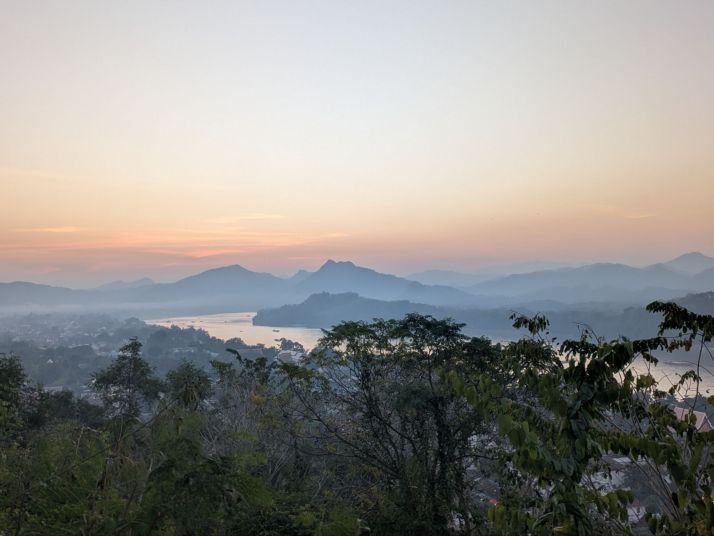
[Luang Prabang for 3 nights to start our trip]
Sometimes, you just know.
Call it experience, call it luck, call it intuition, call it one of the very few good things about getting older, but sometimes you just know the right decision.
So it was with somehow deciding to spend 5 of our 17 days at Luang Prabang in Northern Laos.
I had never heard of it for the first 50.5 years of my life but after reading about it for 3 minutes I knew this was my sort of place and I decided to make it our first stop. No discussion with Luce or L. or C. – this is a benign dictatorship not a democracy.
Luang Prabang is a town (city) of 160,000 on the banks of the Mekong River, 11 hours drive from the capital Vientiane. It is defined by the many monasteries, the monks-in-training and the tropical trees and flowers which thrive in this areas of two seasons: ‘wet’ and ‘dry’. The powers that be have vision too – they have forbidden buildings taller than the tree line and they have insisted on traditional building styles. This wouldn’t work in many places – Croydon, New York – but here it creates an atmosphere of authenticity, of welcoming and of confidence.
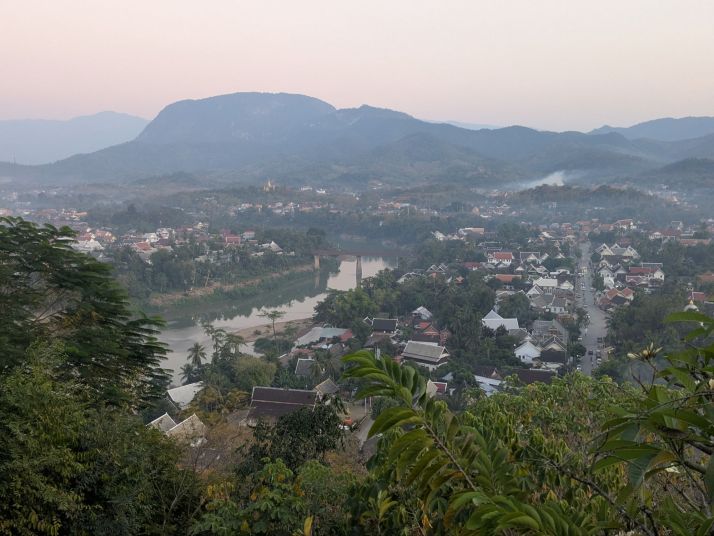
Why is it so special? I will try to do it justice, and I am aware that it can be annoying to describe a place only by reference to others (though this is how the publishing and music industry works. Indeed, it is so engrained into the book publishing psyche that they are called your ‘comps’ – the books which you compare your book to. You put them in CAPITAL LETTERS in your pitch letter, as if the literary agents are too bored to read anything other than BIG WORDS to understand your book. And you’ll be familiar with music journalism that cannot help but list the bands most like the album being reviewed – ‘a touch of Bob Dylan meets Lady Gaga, or at least if she was obsessed with a death metal take on Simon & Garfunkle’).
In that vein, the town reminds me of Kathamndu in the 90s; of San Cristobel de las Casas in Mexico; even of Pushar in India, though that’s a stretch I realise. The common threads through them are spectacular physical assets, a strong sense of spirituality, peaceful friendly people and a developed-enough tourist industry as I have no desire to lie on straw mattresses and eat rice three times a day (I told you I was getting soft).
In Luang Prabang’s case, it sits on the Mekong, which travels 4500 km from China to the South China Sea via Myanmar, Laos, Camobida and Vietnam. You don’t need to have read Joseph Conrak, taken geography A level or seen Apocalypse Now to be excited by sight of the River Mekong. It is only the world’s 12th longest river, but at this point it is our favourite and we don’t care if we’re biased.
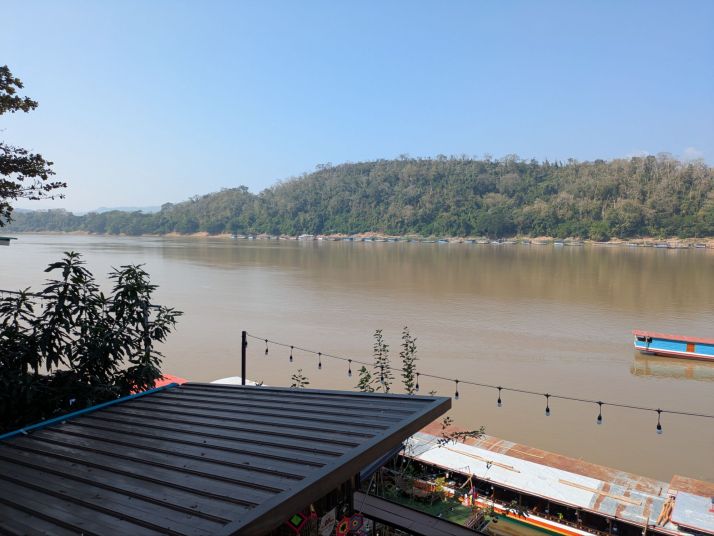
Beyond the river, we have big rolling hills. Not quite mountains, but green hills covered in teak, banana and rubber trees. Hills that look hard to trek through as we will realise later in the week. The centre of the town has a well established infrastructure for tourists, but it feels that the spirit of the town still remains – (unlike say Edinburgh which is now one huge pulsating tourism entity – still wonderful but a pastiche of itself).
The tourist industry and the local culture come together** most immediately not at the temples, but at the night market, a selection of 20+ food stalls running from 5-10pm with chaos in the air, small worker bee children collecting empty plates under your feet, dumplings on the fork and beer in the glass.

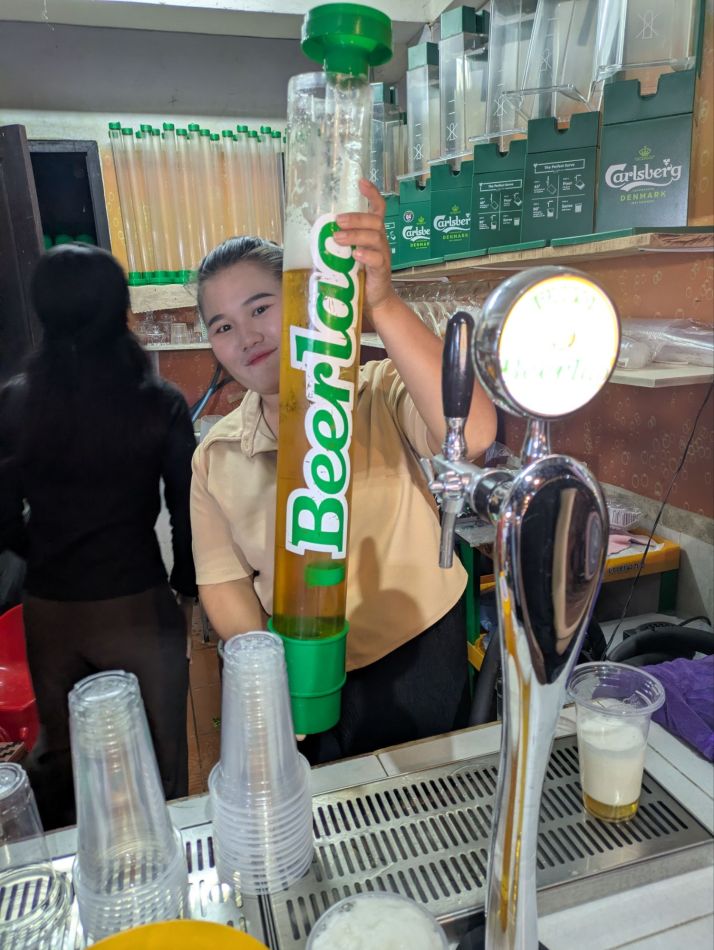
And the prices? It’s cheap. No wonder this is heaven for backpackers – a pint is £1; a serious bowl of chicken noodles is £3. If you’re a greedy bast**d and want to drink 5 pints without going to the bar – you can! What a country. Why on earth don’t we have this in the UK? The focus on beer is so advanced here that they put a long cylinder of ice into the beer holder as they pour it.
I love this country!
The currency is Lao Kip and its weakness is a struggle for the country; their purchasing power compared to big brother Thailand is constrained and many young Laotians work in Thailand and send money home. Again, more of this on our trek.
Before that, some rabbits. This couple drove from Thailand with their rabbits. They put them in a pram and take them out to dinner. Why not? Who says stop at small white (fat) Maltese poodles?

Beyond the safeguarding of long-eared friends, Luang Prabang is known for its monasteries. Young boys join the monasteries and some spend their whole childhood training. We are told that for some very poor families this offers a safer and better route for their children than life at home. The worlds collide at 6am every morning where monks emerge to collect ‘alms’ from non-monks – which means that tourists give them money. I say we ‘were told’ as we are too lazy to get up at 5am.
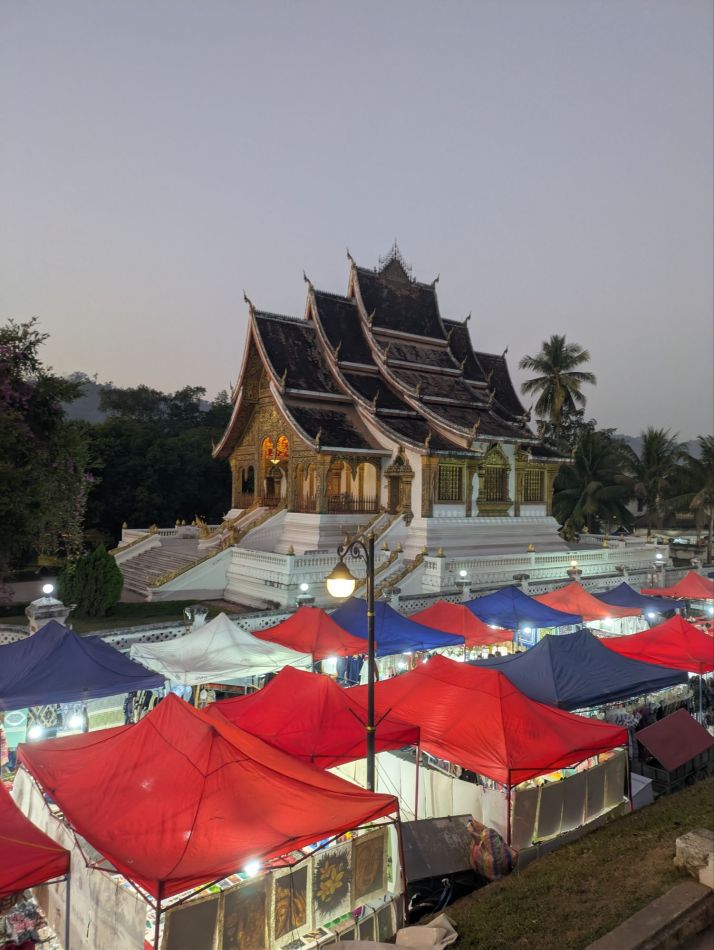
** I need to review my comment about tourists and locals coming together in the night market, as I wonder if the ‘locals’ are in fact Chinese tourists and I am not skilled or experienced enough to know if somone is from Thailand, Laos or China from a distance. The Chinese influence is tangible here – the biggest bluest most garish hotel built outside the town has just been finished – financed by the Chinese for their tourist market. Given the proximity of the country, this is not unlike Brits going to France.


Are you sure those rabbits aren’t the main course?
LikeLike
Brings back memories of a wonderful river cruise up the Chao Phraya river from Bangkok to Ayutthaya (ancient capital of Siam) drifting past hundreds of glorious temples. Tempting me back to explore Asia (and make the most of my golden decade!)… which amongst other plans was scuppered by covid etc. Have a brilliant time x
LikeLike