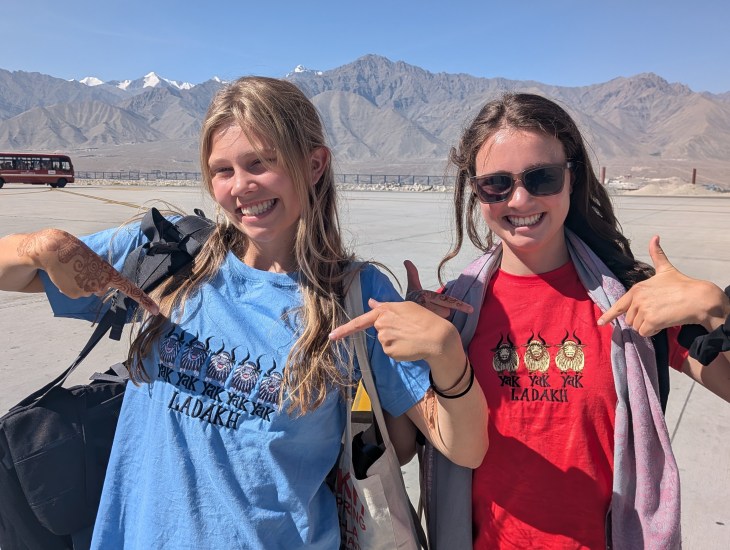
The questions we have been asking ourselves, and to which we don’t quite have the right answer, is “why do we love this place so much?” and “why are the Ladakhi people so friendly?” We can point to potential factors – cultural influences, the low density of population, the frontier geography, the foundation of Buddhism which is now coming under threat, and the cynical amongst us might point to the dependency on tourism (hence be nice to those European guests). But this doesn’t seem to cover it and the implied second question hangs in the air: “Can we treat people back home as we have been treated here?” Or is this just naive – it’s easy to be kind on holiday but ‘normal life’ requires different behaviours. As we leave these are some learnings and reflections on our brief 10 days here, starting with somewhere 1000 km away.
The Nepal flash floods only become more horrific with time
Leh (capital of Ladakh) is 2000 km by road from Kathandu and the flight is 1000km, so why does the Nepal disaster feel so relevant? Mainly because we have just spent 5 days in a large Himalayan river valley and the floods swept through a different set of Himalayan river valleys. The causation of the Nepal disaster is still being debated, and if it was caused by the rock collapse on the north side of the Langtang Lirung mountain, is that due to climate change? One key difference between Ladakh and Nepal is the volume of ice, the volume of glaciers. Ladakah’s mountiains are far lower than those in Nepal and there are fewer glaciers – these photos from our flight to Delhi illustrate that even where we saw glaciers, they are retreating.
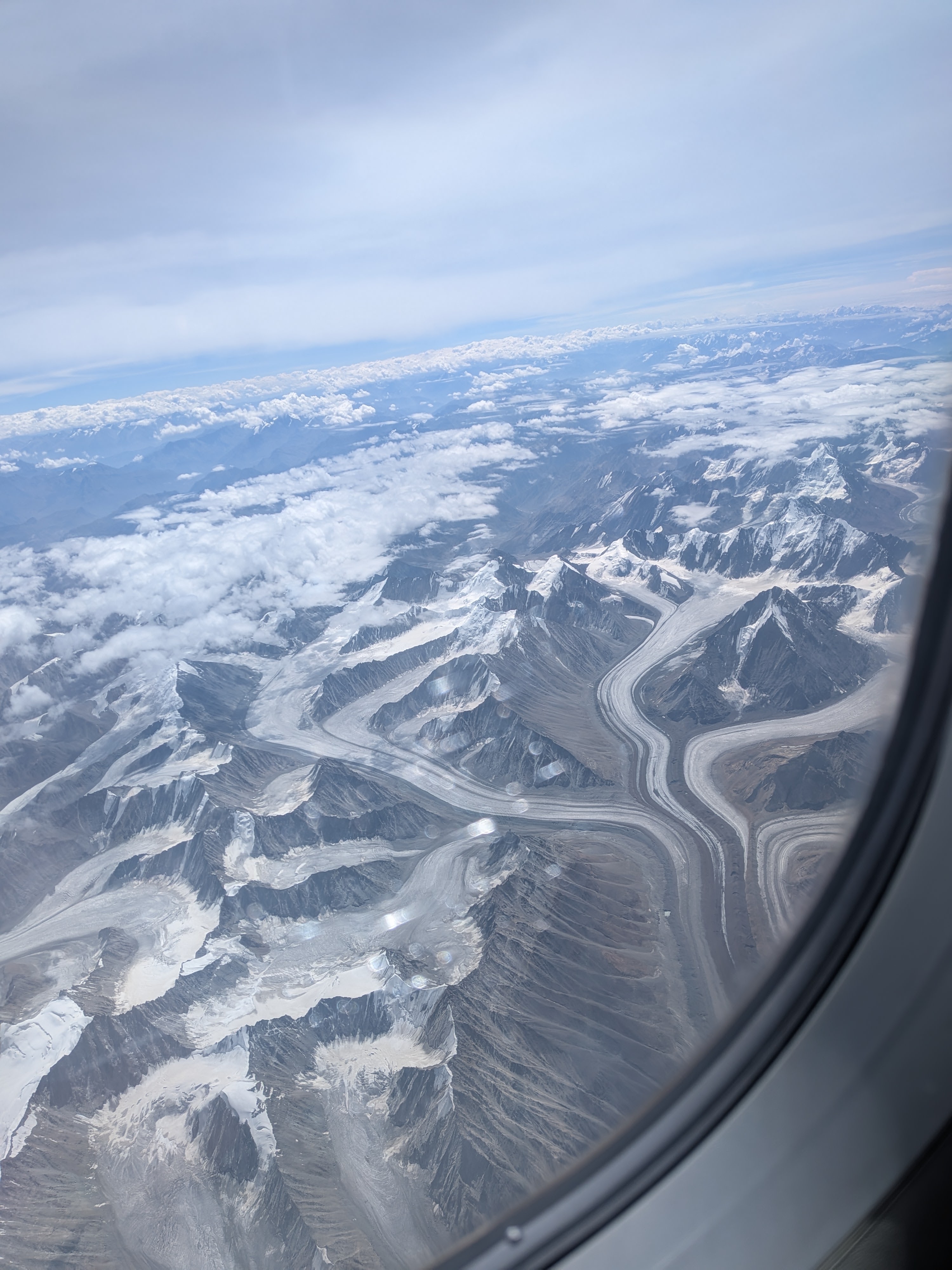
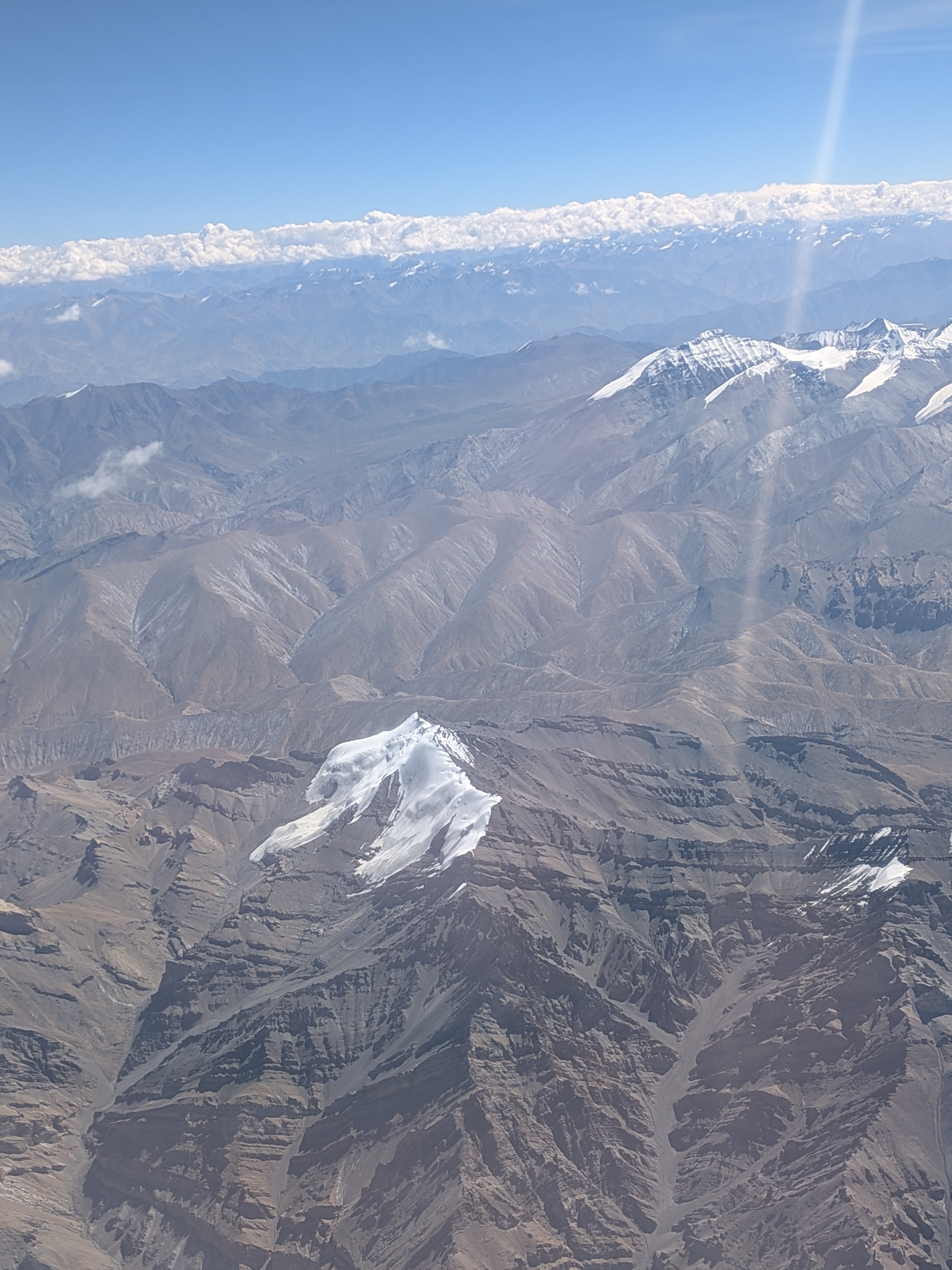
Does this mean Ladakh is at lower risk of such floods? I don’t know and that doesn’t change the long-term challenges in Nepal. As I write this 4247 people are missing and many people are trapped in hydro-electric tunnels. The short-term challenge is to rescue those trapped, identify the deceased, rebuild the villages and infrastructure projects and the longer-term challenges are just as tricky: a potential reduction in tourism which is 15% of the economy and repeated ‘black swan’ geological disasters from a glacial landscape which is, apparently, warming faster than other moutainous regions and almost impossible to predict.
If you wish to donate, here are three organisations which are helping on the ground in Nepal right now. I’m a member or donor of the first two and they seem to run themselves with the right levels of governance:
https://www.himalayan-foundation.org/donate/ – an American charity
https://www.canepal.org.uk/support-us – a UK charity
Ladakh: tiny, huge and strategic
The paradoxes are obvious: Ladakh is the second largest union territory in India (the country is split into States and Union Territories with the latter having less autonomy) yet has only 0.02% of the country’s population (based on estimates of 300,000 out of 1.4 billion). At 59,000 km2 it is roughly a quarter the area of the UK. The religious breakdown is 46% Muslim, 40% Buddhist, 12% Hindu with the rest being Sikh,Christian, etc. Given Modi’s ‘Hindu First’ approach of moving from a secular society to one that promotes the influence of Hinduism above other religions, it could look like Ladakh is forgettable and forgotten, at least politically.
However, this empty, stark landscape takes on political significance due to the borders with Pakistan and China. I’ve written previously about the conspicuous military presence in Kashmir along the Pakistan border, and into Ladakh near Kargil – site of the ‘Kargil War’ with Pakistan in 1999. The China feud feels lower profile but it is more recent: in 2020 the Chinese objected to Indian activity in the Galwan River valley near the Line of Actual Control (the official name of the Indian/China border) and casulaties followed with 20-50 people killed.
The conflict with China had unintended consequences – the road from Leh to Manali had been a problem for years, with stories of corruption and red tape stopping improvements. However, after 2020 resources were found to improve it. Why? As traffic on this road is more hidden from China and Pakistan than other roads into Ladakh and so now it took on strategic significance. A final observation is that the Trump Tarriffs looked to have calmed things between China and India who now need to trade with each other more than before.
Sewage and sandlewood, bulls and bikers
Speaking of trade, Ladakh’s GDP per capita is approximately $3200, it comes halfway up the league table of the 34 states and territories (Sikkim being top at $8286 and Bihar way behind at $804 which seems impossible). The modern tourist infrastucture blends easily and seamlessly in Leh. I sit one evening on the pavement on Fort Road, waiting for Luce and the girls to do some shopping or run an errand. The golden hour light adds presence to the slow evening vibes. The shops are quiet, the traffic is relentless, the energy is stable and calm. The scent of sandlewood comes through, enticing, evocative, exotic. It reminds me of being 20 which is always welcome (though to be clear this was not because I wore Lynx Sandlewood). Simultaneously the ammonia (or is it hydrogen sulphide?) of the nearby sewer enters the equation and the sandlewood cannot compete; the blend is nauseating. It feels like an obvious – clumsy even – metaphor for a region in transition, from the old customs and habits to the demands of the rich and wealthy tourists.
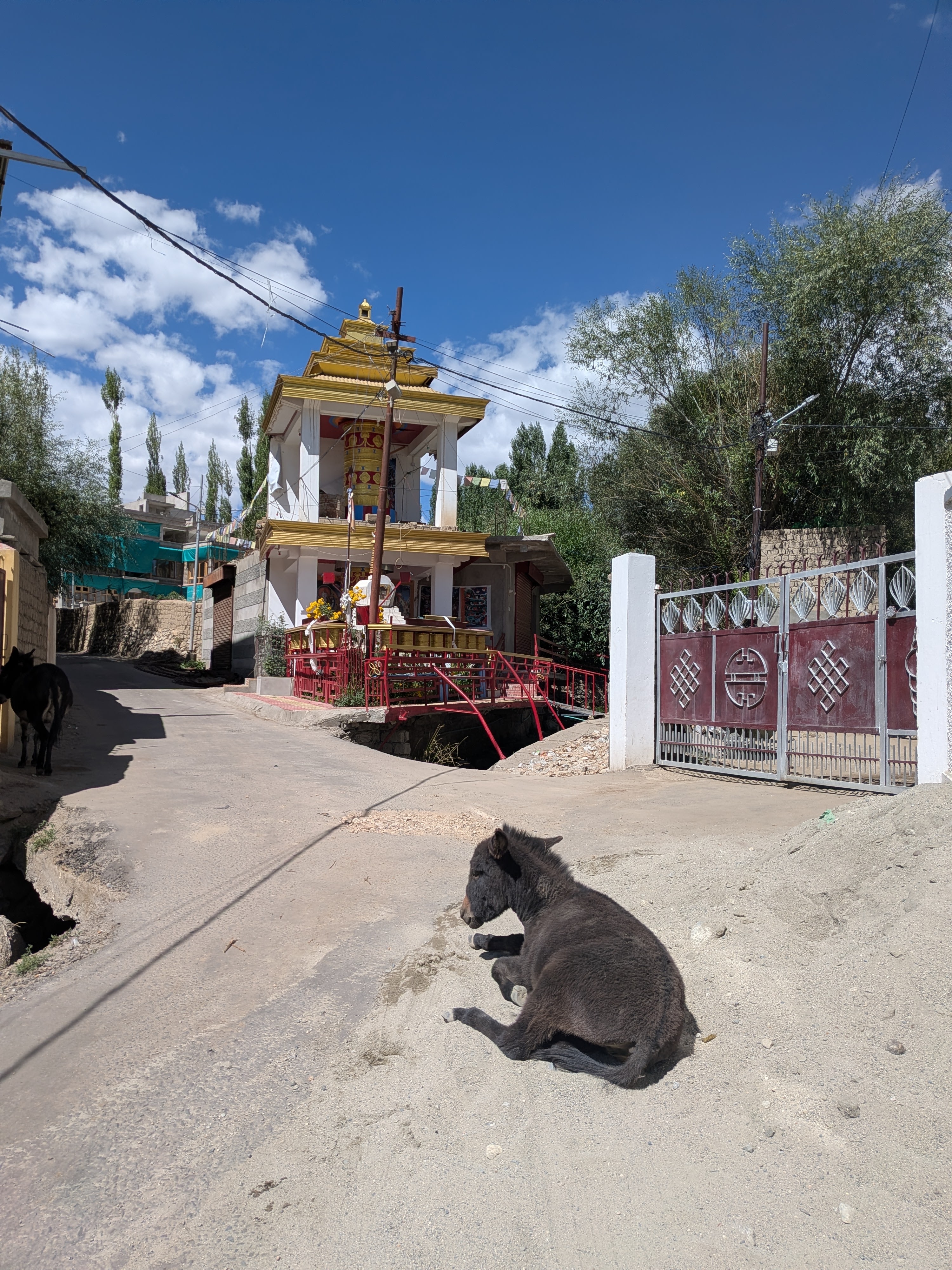
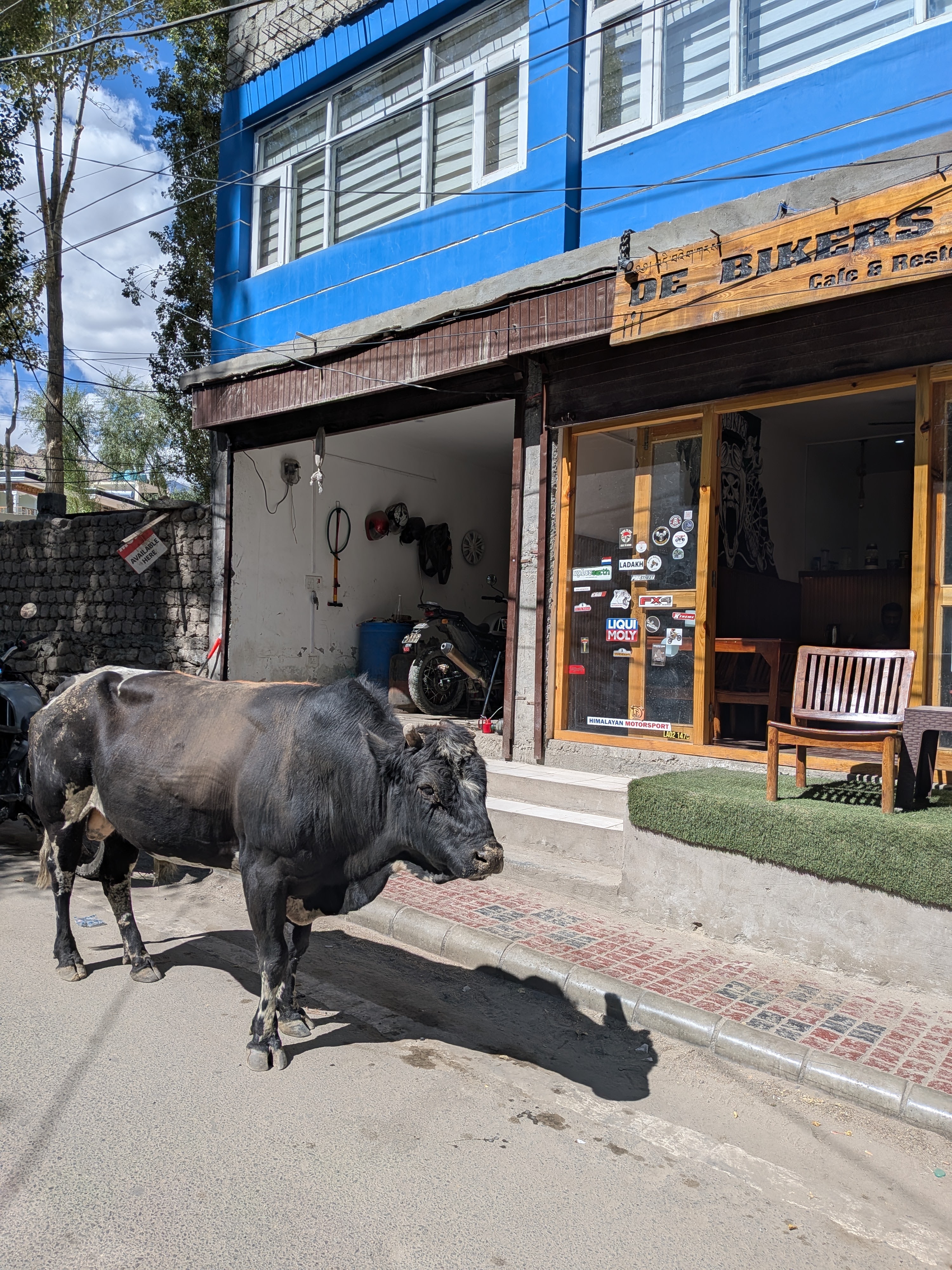
This dichotomy is easy to see. Toyota Landcruisers with Government insignias blast past cows standing in the road, stranded in the road, with no fields nearby, no grass or fodder in sight and no obvious upside for cow or cow owner. We restrain our inner militant RSPCA tendencies as this is not our domain. The photo below feels fitting for Leh – a lost (or relaxed) cow next to a motorbike shop with a German name that sounds like a soft-metal entry for Eurovision. De Bikers. The motorbike scene is huge in the summer in Ladakh and Enfield even have their own bike for touring the mountains – the Enfield Himalaya with thicker tyres and better suspension than the old Bullet which hippies and bikers loved from the 50’s onwards. As we go over the Kordhung La Pass (at 5600m above sea level) there are maybe fifty Enfields, all with Indian tourists riding them in groups, protective leathers expanding shoulders, and it looks like a lot of fun.
Climate change, solar and Sonam Wangchuk
Ladakh used to be ‘land of the snow’ with little rain. That is changing with more rain over the summer. Rain is good, right? Well, it also brings problems. On our first night trekking it rained a lot at night – more than normal. This led to the electricity sub-station of one village not working. It also flooded the water pipe of one of our homestays which meant their drinking water was filled with silt and a new source had to be found. Fortunately in a river valley, water is never too far away.
Solar energy is a live subject. Ladakh has lots of land and lots of sunshine – it should be perfect for solar generation. However these projects are not straightforward: the planned 11-13 GW project on the Changthang Plateau is contraversial with some locals complaining the profits will flow away from Ladakh, others saying it will compromise the local nomads whose ‘pashmina’ goats are their livelihoods. These arguments feel familiar, close to home, the Botley West solar project aims to generate 800 MW from 100-1400 hectares, much of it leased from the Blenheim estate, even if there are no pashmina goats on the more manicured Oxfordshire fields.
Innovation, renewable energy, becoming self-sufficient – all part of the story of a chap called Sonar Wangchuk. Our guide Lobsang tells us about Sonam with enthusiasm. He apparently re-wrote all the engineering textbooks from Kashmiri into his native Ladakhi; he bought back ancient techniques to store water in ‘ice stupas’; he introduced siphoning to replace blasting to make glacial lakes less dangerous; and he created solar-powered tents for the Indian army. He is seen as a modern Ladakhi hero and is heavily involved in politics, taking it to extremes with several hunger strikes on points of principle. Find out more here.
Sunglasses and kindness, the taxi drivers driving an easy bargain
This post started asking why we love Ladakh so much. While it could be about the calm Buddhist influences, the lack of people, the lack of other tourists, the endless mountains, the IMAX views or the dry sunshine charging the bluest of skies and staying below UK heat stroke level, but as always it’s about the people. I finish with two small anecdotes to illustrate.
Before our trek, Luce, Lola and Cesca hit the shops, determined to single-handedly increase Ladakh’s GDP per capita through the generosity of their retail therapy. Strategies were conconcted, bargaining was practised and, eventually, deals were struck. Then at some point Lola lost her sunglasses – she knew not where. Fast forward five days, we return from our trek and wonder into Leh centre for some dinner. We walk past one of the 20 shops which they visited previously and the owner motions for us to come in. We wonder if he wants to salvage some profit margin back from the family and our instinct is to say hello, wave and walk on. He disappears….. and returns with Lola’s sunglasses. Left in the shop five days before. While they’re not expensive, he could have sold them, kept them, given them away. But no.
Second, there is a standard taxi tarriff in Leh of 300 Rupees for each journey around the centre of town. Yet it took us a few days to figure this out. On our first day we hand a taxi driver 500 Rupees and ask him ‘Is it 400 Rupees we owe you?’ (Don’t ask us to run your next procurement negotiations). He says ‘No, 300 you owe’. Our defences lowered.
How many taxi drivers bargain you down?
 Travels with my Family